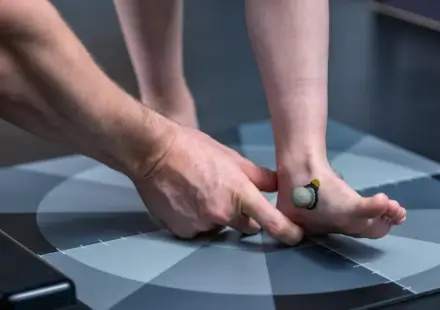
Combining force plate testing with a range of other injury rehabilitation techniques allows professionals to gather quantitative data which can be used in real-time to support recovery.
Learn more about how force plate testing helps guide injury rehabilitation with Injury Mechanics today.
What is the purpose of force plate testing?

The purpose of force plate testing is to measure the physical force exerted by your body when pushing into the ground. This is known as ‘ground reaction force’. This gives clear and precise data regarding muscle strength, balance and explosive power, allowing physiotherapists to pinpoint weaknesses and imbalances, as well as track improvements over time.
This can be applied to support injury recovery and improve targeted athletic training.
What types of tests can be performed using force plates?

Force plate testing doesn’t just allow for one type of test. It allows us to evaluate physical traits such as strength, power, balance and bodily asymmetry:
Each of these testing types serves a different purpose, and how they may be used to guide injury rehabilitation will vary based on what your injury is and what your personal recovery goals are.
The Injury Mechanics team will listen to your aims and utilise force plate testing to support an evidence based approach to rehabilitation.
What are force plates used for in injury rehabilitation?
Force plates are used to very precisely measure and document how the body absorbs and distributes weight through the feet. For the purpose of injury rehabilitation, this data can be applied in a number of ways:
- 1Detecting asymmetries - Tests can be used to reveal gaps in weight bearing capacity on an injured limb/side of the body. Sometimes, this is not visible to the naked eye or through physical analysis.
- 2Supporting sporting return - The ability to track and measure performance improvements through force plate testing allows us to determine whether you meet certain physical capabilities before you fully return to sporting activity. This prevents reinjury or injury aggravation.
- 3Real time feedback - Allowing a client to understand their weight-distribution abilities in real-time supports re-learning how to load limbs in recovery.
- 4Balance/stability tracking - We can measure postural control with standing or single-leg balance tests. This is useful for preventing reinjury in the ankles and/or knees.
How we incorporate force plate testing and results in our injury rehabilitation programmes
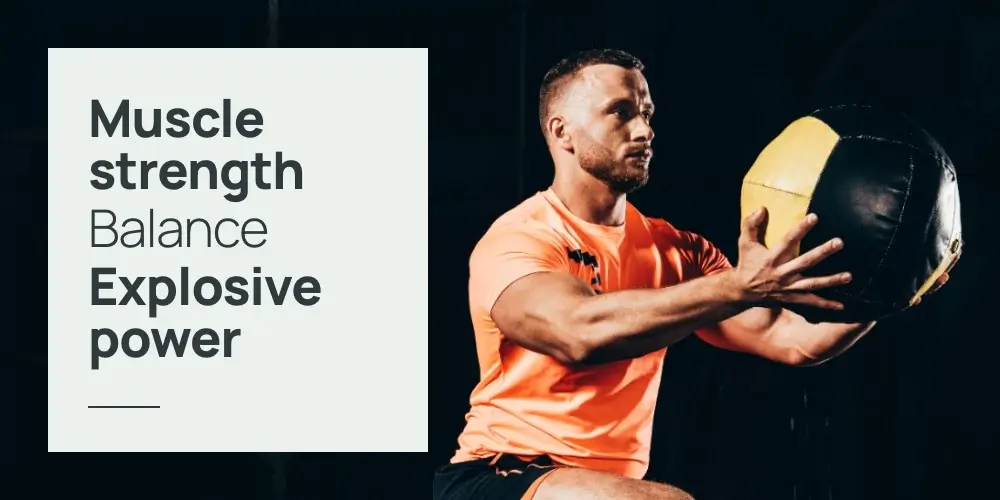
At Injury Mechanics, force plate testing is incorporated as one part of a wider, evidence-based rehabilitation plan rather than a stand-alone test. Every programme starts with a baseline assessment, using our Meloq force plates to record objective figures for strength, power and left-right asymmetry, accurate to within 1% up to 12,000N.
These numbers sit alongside our hands-on clinical assessment of pain, posture and movement quality including, where relevant, a full biomechanical analysis.
From there, the data is used to shape the plan itself. Asymmetry percentages from your report help us decide which exercises to prioritise within your strength and conditioning programme, while regular retesting lets us track whether strength and power are actually returning, rather than relying on how a movement looks or feels.
We use these benchmarks to set clear, measurable criteria for returning to sport or full activity, rather than a fixed timeline. That combination of hands-on expertise from our team and precise data means decisions about progressing your rehab are never a guess, reducing the risk of returning too soon and reinjuring the area.