The basic theory behind altitude training

Put simply, hypoxic altitude training includes exercising at elevations above 2000m (intermittent hypoxic training simulates such conditions), where oxygen levels are low enough to force physiological adaptations.
The theory behind this is that your body will begin to produce more red blood cells and hemoglobin to enhance oxygen delivery, which increases endurance and aerobic capacity.
The results from professional altitude training involve conditioning your body for performance specifically at high altitudes, or simply for boosting general performance regardless of altitude.
The process of hypoxic altitude training, simplified
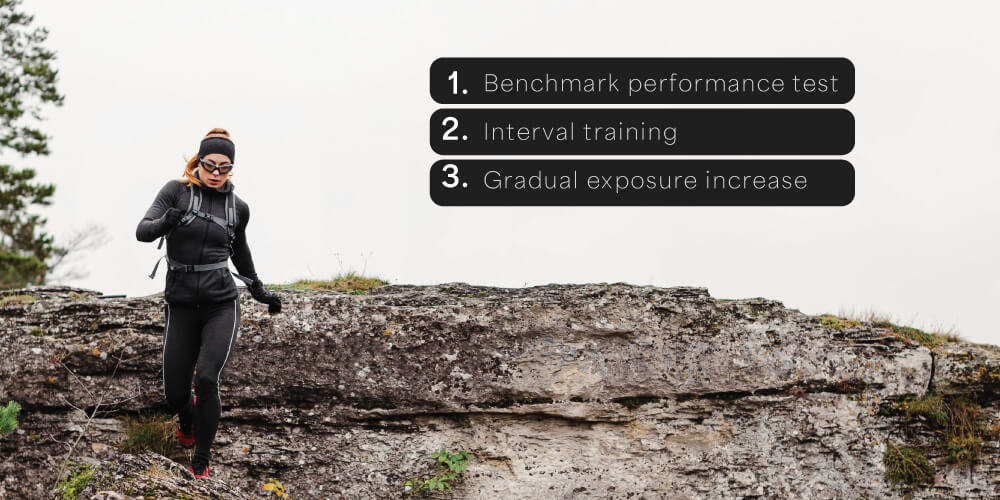
Generator-based hypoxic altitude training uses a specialised hypoxic generator to remove specific amounts of oxygen from the air, then deliver this air to you through a training mask.
The generator-based training method begins with a benchmark performance evaluation, then moves into interval training sessions tailored to your goals:
- 1Benchmark performance test - A 20 minute functional threshold power test helps to provide a baseline understanding of your current performance and capacity. This allows for scientifically-backed optimal oxygen target levels based on effort, heart rate, and other key benchmark statistics.
- 2Interval training - Intermittent hypoxic training involves controlling the oxygen levels, alternating between thin air and normal air every few minutes (varying based on your benchmark outcomes).
- 3Gradual exposure increase - As your body begins to react and adapt to the stress of low oxygen, your muscles become more efficient at using oxygen, which increases aerobic capacity and metabolic health hand in hand. As this efficiency increases, you can increase hypoxic exposure gradually.
If you’re interested in targeted and evidence-based hypoxic altitude training, get in touch with Injury Mechanics below.
When should you start altitude training?
The optimal starting time for altitude training varies depending on the purpose and reasoning behind the training:
How long do you need to do altitude training for?
If your intention is to prepare for a race or major event, you should begin training roughly 4 weeks before the event, and do it up until the event itself. The length of an individual session would usually vary between 30 - 90 minutes based on your stage of training.
If intermittent altitude training is being used for injury rehabilitation, a 3 - 4 week program is generally the most optimal timeframe.
How long do the effects of altitude training last?
The effects of altitude training are temporary, because your body becomes used to ‘normal’ oxygen conditions again when exposure to low levels are stopped.
For intermittent altitude training, you’ll likely notice physiological benefits at their peak for the first week. This is because the first 7 days after a training period are the days during which your blood is thick with oxygen-carrying cells and your mitochondria are at maximum efficiency.
In the second week, benefits remain, but your body begins the process of breaking down extra red blood cells. This is why recovery times between workouts start to slow down from about day 15 until, eventually, after about a month, effects will almost entirely wear off.
Is altitude training dangerous?
Altitude training can be dangerous, but only if mismanaged or carried out without proper respect for your body’s limits.
Potential risks include altitude sickness and cardiovascular strain, but managing these risks through gradual acclimatisation, intensity management and medical supervision means you’re highly unlikely to run into any issues, especially with the professional guidance of the Injury Mechanics team.
The proven benefits of altitude training
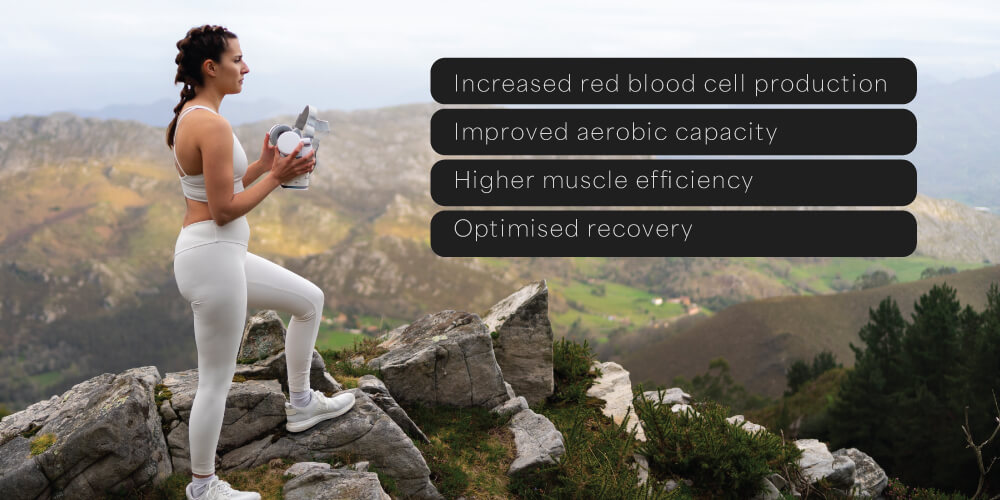
Altitude training is a proven training strategy backed by science, which is why it’s such a common method of performance enhancement.
Here are a few of the proven benefits of altitude training:
The benefits of hypoxic training can be achieved with Injury Mechanics, a team with the knowledge and expertise necessary to conduct effective and safe sessions with your goals as the backbone of our approach.